

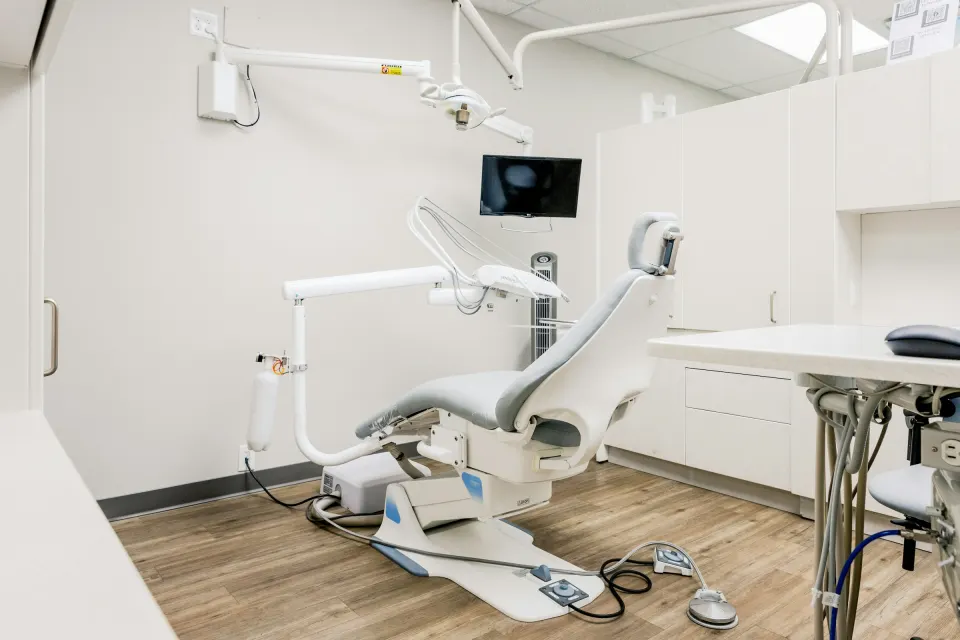
Emergency dental care is the diagnosis and treatment of problems that need prompt attention, such as sudden toothache, a tooth or gum abscess, teeth broken by an injury, or bleeding after oral surgery. The first aim is to control pain and infection; permanent treatment for the underlying cause is then planned. Not every pain felt in a tooth actually comes from a tooth, so an accurate diagnosis is essential.
- Accurate diagnosis of the source of pain with examination and X-rays
- Fillings, root canal treatment or extraction for decay and abscesses
- Treatment of fractures and cracks according to the extent of damage
- Liaison with other specialists for pain that is not dental in origin
Treatment process
Assessing the problem
We ask when and how the pain or injury started and review your general health.
Examination and X-rays
A clinical examination and any necessary X-rays show whether the problem comes from a tooth, the gums or elsewhere.
Emergency treatment
To control pain and infection, a filling, root canal treatment, drainage of an abscess, extraction or, if needed, medication is provided.
Definitive treatment and follow-up
Once the emergency is resolved, permanent treatment is planned; gum-related problems require longer-term follow-up.
What counts as a dental emergency?
- Toothache from decay and dental abscesses (originating in the tooth)
- Gum abscesses (periodontal in origin)
- Trauma: broken or cracked teeth, soft tissue injuries and damage caused by teeth grinding (bruxism)
- Bleeding after oral surgery
- Referred pain: pain that feels like toothache but is not dental in origin, such as sinusitis, trigeminal neuralgia or migraine
Toothache and abscesses caused by decay
Tooth decay is the most common cause of a dental emergency. The pain can be relieved with a filling, root canal treatment or extraction. Where there is an acute abscess, treatment may begin with medication to bring the infection under control.
Gum abscesses
Gum abscesses arise from the tissues that support the tooth (the gum and bone), usually as a result of inadequate oral hygiene. They are most often linked to a build-up of tartar; food trapped in a gum pocket and infection of the gum around a wisdom tooth also belong to this group.
Emergency treatment starts with draining the infection, extracting the tooth if necessary, or medication in acute cases. This is followed by gum treatment that requires longer-term follow-up.
Broken teeth, cracks and dental trauma
An impact to the teeth and surrounding tissues can crack, break or dislodge a tooth.
If part of a tooth breaks off
Treatment depends on:
- The type of fracture
- The size of the broken piece
- The role of the tooth in the mouth
- The patient's overall oral condition
- The patient's age
If you can find the broken fragment, keep it and see a dentist without delay. Small fractures can usually be repaired with tooth-coloured filling materials.
Cracked teeth
- Small cracks: Usually superficial lines on the surface of the tooth, which often need no treatment.
- Larger cracks and fractures: Depending on the extent, a filling, onlay, crown, root canal treatment, a post, or extraction may be needed.
- Split teeth: Seen mostly in back teeth that are weakened and under heavy load; they usually require extraction.
If an adult tooth is knocked out
Stay calm. Hold the tooth by the crown, not the root. Do not let it dry out: keep it moist in saline, milk or saliva and see a dentist, ideally within one hour. The sooner, the better.
Teeth grinding (bruxism)
Bruxism is the involuntary clenching or grinding of the teeth, which causes wear and cracks on the biting surfaces and, in advanced cases, jaw joint problems. Soft or hard night guards are used for treatment; depending on the patient, supportive options such as laser or botulinum toxin (Botox) may also be considered.
Bleeding after an extraction
- Slight bleeding after an extraction is normal.
- For oozing, placing gauze over the socket and biting firmly for about half an hour usually stops the bleeding.
- If bleeding continues, contact your dentist.
- If there is heavy bleeding that repeatedly fills the mouth, contact your dentist or the nearest medical facility immediately.
Pain that does not come from the teeth
Some pain felt in the teeth does not originate there; sinusitis, trigeminal neuralgia or migraine can all feel like toothache. Because the pain is felt in a tooth, patients naturally see a dentist first.
This is why the first examination matters so much. Incomplete information or an inadequate diagnosis can lead to unnecessary root canal treatment or the wrong tooth being extracted. When the pain points to a non-dental cause, we liaise with neurology or ear, nose and throat specialists rather than carry out unnecessary treatment. This is equally important for visitors who develop a dental problem while travelling in Denizli, Turkey.
Frequently asked questions
My adult tooth has been knocked out. What should I do?
Stay calm and hold the tooth by the crown, not the root. Keep it moist in saline, milk or saliva and see a dentist, ideally within one hour. The sooner you are seen, the better.
Part of my tooth broke off after a knock. What happens next?
Keep the broken piece and see a dentist without delay. Treatment depends on the type of fracture, the size of the piece, the role of the tooth and your age. Small fractures can usually be repaired with tooth-coloured filling materials.
Is bleeding after an extraction normal?
Slight oozing is normal; biting on gauze over the socket for about half an hour usually stops it. If bleeding continues, or there is heavy bleeding filling the mouth, contact your dentist or the nearest medical facility immediately.
Does an abscess mean the tooth must be taken out?
Not necessarily. Depending on the situation, a filling, root canal treatment, drainage or extraction may be needed, and treatment of an acute abscess may start with medication. The decision is made after examination and X-rays.
Is toothache always caused by a tooth?
No. Sinusitis, trigeminal neuralgia or migraine can also feel like toothache. That is why an accurate diagnosis is so important; where needed, we assess the problem together with neurology or ENT specialists.
How is teeth grinding (bruxism) treated?
The most common approach is a soft or hard night guard, which protects the teeth from wear and cracking. Depending on the patient, supportive options such as laser or Botox may also be considered.
The information on this website is for general information only and does not replace an examination, diagnosis or treatment plan by a dentist. Treatment and outcomes vary from person to person.