

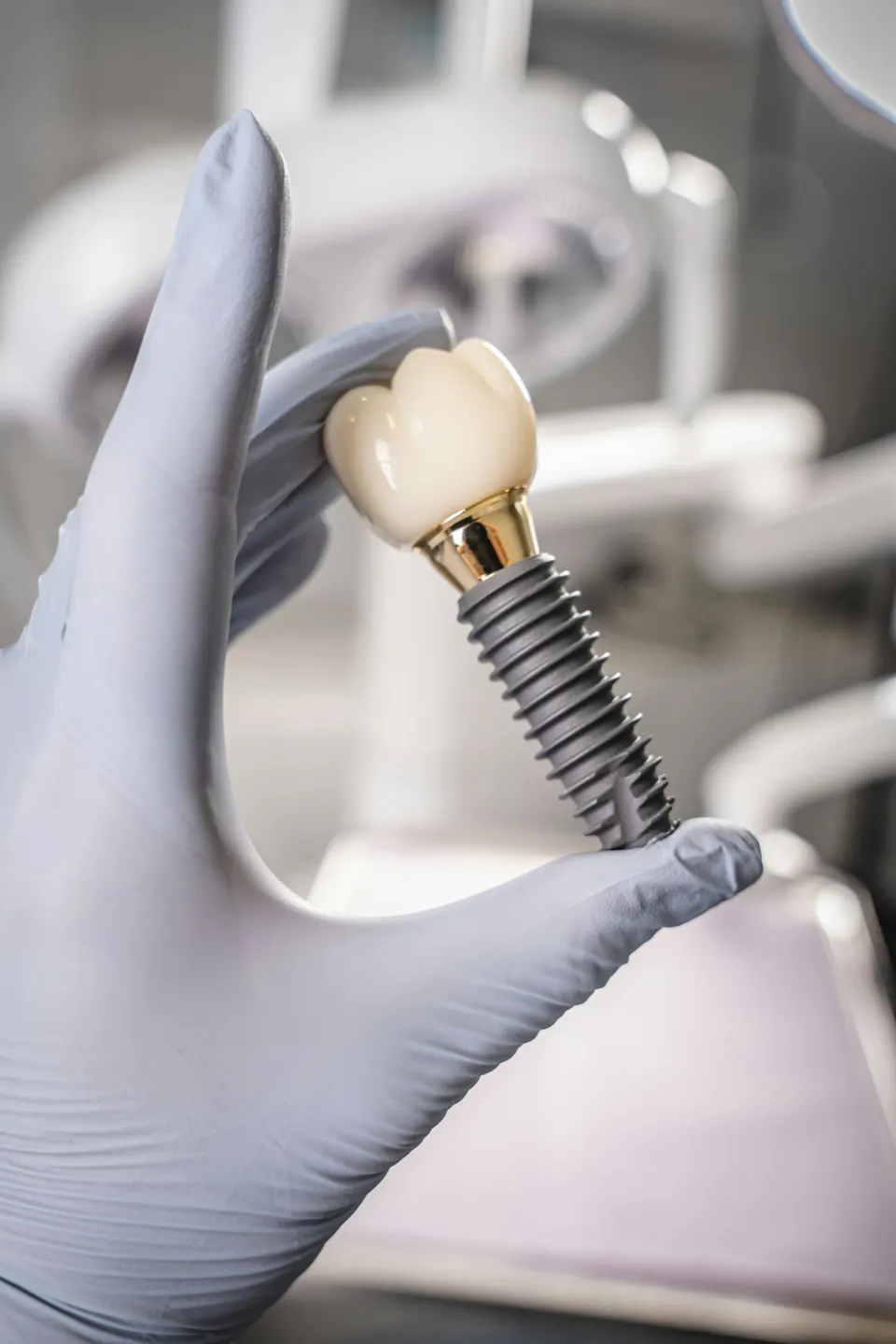
Oral surgery is the area of dentistry covering surgical procedures in the mouth, from tooth extraction and impacted wisdom teeth to the treatment of jaw cysts and bone preparation before implants. Most procedures are carried out under local anaesthesia, after a clinical examination and X-ray assessment. At our clinic in Denizli, Turkey, every procedure is followed by detailed aftercare instructions to support healing.
- Most procedures are performed under local anaesthesia
- Diagnosis and planning are based on X-rays and, where needed, a CT scan
- A sinus lift can create bone for implants in the upper back jaw
- PRF, prepared from your own blood, is used to support healing
Treatment process
Examination and imaging
A clinical examination and X-rays identify the source of the problem; a CT scan is used for more detailed assessment where needed.
Treatment plan
The type and extent of the procedure and its possible risks are explained, and your medication and general health are reviewed.
Surgical procedure
The procedure is usually carried out under local anaesthesia, using materials such as bone graft or PRF to support healing where appropriate.
Aftercare and review
You receive aftercare instructions; stitches are removed if needed and healing is monitored at follow-up visits.
Tooth extraction: when is it necessary?
The first aim in dentistry is always to save the tooth, but extraction may be needed for:
- Teeth with extensive loss of structure due to decay or fracture
- Teeth that have become very loose due to advanced gum disease
- Teeth that cannot be saved despite root canal treatment
- Baby teeth that have not been lost on time
- Teeth that need removing as part of orthodontic treatment
- Teeth located within a cyst or tumour
Aftercare following an extraction
- Bite firmly on the gauze for about 1 hour and do not change it unless necessary; changing it repeatedly disturbs the blood clot.
- The clot is the foundation of healing. Sucking, frequent rinsing or spitting can dislodge it and delay healing.
- Do not eat for 2–3 hours, then choose lukewarm food.
- Do not smoke for 48 hours.
- After 24 hours, start brushing the area gently; use an antiseptic mouthwash if your dentist advises.
- If you need pain relief, choose a painkiller other than aspirin.
- If you have significant swelling, pain or bleeding after 48 hours, contact your dentist.
A few days after an extraction, visible bruising may appear on the face. It is caused by bleeding from small blood vessels in the tissue and usually fades on its own within 10–15 days. Applying warmth from 48 hours after the procedure can shorten this period.
Impacted teeth and wisdom tooth removal
A tooth that remains in the bone after the time it should have erupted is called an impacted tooth; if part of it is visible in the mouth, it is partially impacted. Upper and lower third molars (wisdom teeth) are the teeth most often affected.
Why do teeth become impacted?
- Abnormal tooth position or pressure from neighbouring teeth
- Dense surrounding bone or lack of space in the jaw
- Thickened tissue over the tooth caused by chronic inflammation
- Early or late loss of baby teeth
- Genetics and some systemic conditions
When is removal recommended?
- When it cannot be cleaned and causes bad breath or infection
- When it causes unexplained pain spreading to the face or around the ear
- When it blocks other teeth from erupting or disturbs tooth alignment
- When there is a risk of damage to the neighbouring tooth or of cyst formation
- When it prevents a prosthesis from being made
The procedure is usually carried out under local anaesthesia. Pain, swelling, bruising, limited mouth opening, infection and bleeding may follow. To keep these to a minimum, gauze, cold compresses and medication prescribed by your dentist (antibiotics, anti-inflammatory painkillers, antiseptic mouthwash) are used. On the first day, avoid sucking or spitting and stay away from hot food and drinks. Any bruising usually fades in around ten days, and applying warmth from the second day can speed this up.
Sinus lift
When an implant is needed in the back of the upper jaw, the bone height there is sometimes insufficient. In this case the floor of the sinus is gently raised and bone graft material is placed beneath it to increase bone volume.
Depending on the bone, an open or closed sinus lift technique is used. The appropriate method is chosen after a CT assessment.
Jaw cysts and cyst surgery
Cysts in the jawbone are cavities filled with fluid or semi-solid tissue debris, lined with epithelium and surrounded by a connective tissue capsule. They grow slowly by pushing the surrounding tissues aside, and usually appear on X-rays as round or oval areas with well-defined borders.
They are classified as odontogenic (of dental origin), non-odontogenic and inflammatory cysts.
Treatment is surgical, and the size and location of the cyst determine the approach:
- Enucleation: complete removal of the cyst together with its lining
- Marsupialisation: opening the cyst into the mouth so that it gradually shrinks
Because some types of cyst can recur, follow-up every six months after treatment is important.
Apicoectomy (root-end surgery)
An apicoectomy is the surgical removal of the tip of a tooth root, together with the inflamed tissue around it. It is considered when:
- Infection at the root tip does not respond to root canal treatment, or the canals are problematic
- A broken instrument inside the canal cannot be removed and prevents treatment
- There is a fracture close to the root tip
- A perforation occurs near the root tip during root canal treatment, or filling material extends beyond the root
The procedure is performed under local anaesthesia. Pain, swelling, bruising and bleeding may follow, and rarely complications such as effects on neighbouring teeth or an opening into the sinus can occur. Medication prescribed by your dentist helps keep these to a minimum.
- Avoid heavy biting on the treated tooth for a few months.
- On the day of surgery, avoid hot food and drinks and apply a cold compress externally.
- If bruising appears, warm compresses from the second day help it resolve; it usually disappears within about 10 days.
PRF (platelet-rich fibrin)
PRF is a fibrin material rich in platelets and growth factors, obtained by spinning a small sample of the patient's own blood in a special centrifuge. It is then applied to the surgical site of the same patient.
Growth factors released from the platelets support the body's tissue repair mechanisms. PRF allows a far higher concentration of platelets and growth factors to be delivered to the target area than the bloodstream alone can provide.
- It can be used on its own or mixed with bone graft material in areas of bone loss.
- As it is made from your own blood, it carries no risk of allergy.
Frequently asked questions
Do impacted wisdom teeth always need to be removed?
No. Removal is recommended when there is a problem such as infection, pain, bad breath, damage to neighbouring teeth, risk of a cyst, or interference with a prosthesis. The decision is made after examination and X-rays.
When can I eat after an extraction?
Avoid eating for about 2–3 hours. After that, choose soft, lukewarm food, avoid sucking on the area and do not smoke for 48 hours.
Is facial bruising normal after an extraction?
Yes. Bruising can appear, particularly after surgical extractions, because of bleeding from small vessels in the tissue. It usually fades within 10–15 days, and warmth applied after 48 hours can help.
Can I fly home soon after oral surgery?
Many patients can travel after simple procedures, but timing depends on the procedure. After a sinus lift in particular, ask your dentist when flying is appropriate and plan your stay so that early check-ups and stitch removal can be completed.
What is PRF and is it safe?
PRF is a healing-support material prepared from your own blood using a centrifuge. Because it comes from your own body, it carries no risk of allergy.
The information on this website is for general information only and does not replace an examination, diagnosis or treatment plan by a dentist. Treatment and outcomes vary from person to person.