

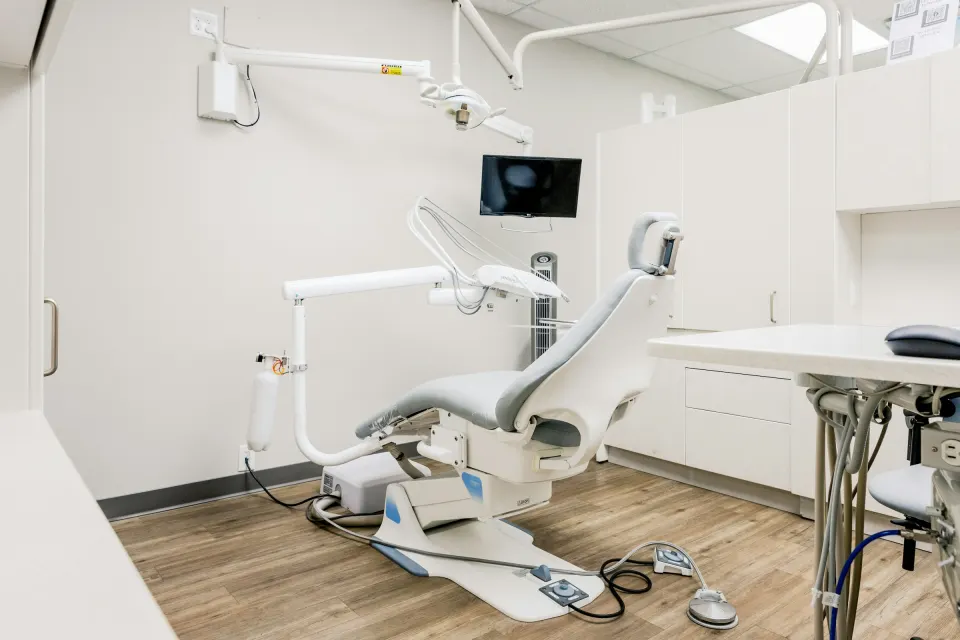
Orthodontics is the branch of dentistry that examines the relationship between the face, jaws and teeth and treats the irregularities that develop between them. Crowded teeth are not only an aesthetic concern; they also make oral hygiene harder, as more plaque collects around misaligned teeth. For patients seeking orthodontic care in Denizli, Turkey, treatment is planned according to age and stage of dental development.
- Guides jaw growth in children and corrects tooth alignment in adults
- Both fixed (bracket) and removable appliance options
- Less visible ceramic braces and clear aligners for adult patients
- Retention after treatment helps teeth hold their new position
Treatment process
Examination and assessment
The relationship between the face, jaws and teeth is assessed, and the need and timing of treatment are set according to the stage of dental development.
Preparation
Any tooth decay and gum problems are treated before orthodontic treatment begins.
Choosing and fitting the appliance
Fixed braces, a removable appliance or clear aligners are chosen by weighing clinical need, the patient's expectations and likely compliance.
Regular reviews
At review appointments the appliance is adjusted and tooth movement is monitored.
Retention
Once the appliance is removed, retainers are worn for the period your dentist recommends so that the teeth do not drift back.
Why is orthodontic treatment needed?
When teeth are not evenly aligned, more bacterial plaque builds up between and around them. Acids produced by the bacteria in this plaque can lead to decay in the enamel and periodontal (gum) problems.
Protruding front teeth that are left untreated are also more prone to injury. Fractured front teeth are common in children whose upper incisors stick out, and an injured tooth may then need root canal treatment, a filling or a crown.
Orthodontics for children: an approach by age
A child's first orthodontic check should take place around the age of 7. This is when the front teeth come through and the first signs of any problem start to appear. If there is not enough room for the front teeth, they can push against neighbouring teeth and cause crowding; creating space at the right time may remove the need for extractions later on.
Crowded or protruding teeth often point to an underlying jaw growth problem. In such cases treatment may be planned in two phases: first the jaw relationship is corrected, growth is guided and, if needed, the jaw is expanded; then any remaining tilting or irregularity of the teeth is addressed. Because most facial and jaw growth is completed by adolescence, delaying treatment for jaw-related problems limits the opportunity to guide growth.
Primary teeth stage (pre-school)
Problems linked to habits such as thumb sucking, lip biting or prolonged use of a bottle or dummy can be treated before a permanent skeletal problem develops if they are addressed at this stage. Appliances that work from inside or outside the mouth may be used for this purpose.
Mixed dentition stage (primary school age)
Baby teeth act as guides for the permanent teeth developing beneath them. If a baby tooth is lost too early, neighbouring teeth can drift into the gap and reduce the space for the permanent tooth. A baby tooth that is shed too late can also cause the permanent tooth to erupt out of position or remain impacted in the jaw.
Permanent dentition stage
From the mixed dentition stage until the end of adolescence, discrepancies between the jaws, such as a lower jaw that sits too far forward or too far back, are addressed.
Orthodontics for adults
Orthodontic treatment is suitable for all age groups; there is no age limit for moving teeth. Age is not a deciding factor in treating crowding between teeth, although early intervention matters for jaw-related problems. Treatment in adults may take somewhat longer.
Appearance tends to matter more to adult patients, so ceramic (tooth-coloured) braces, which are less noticeable than metal ones, and clear aligners are popular choices. Clear aligners are removable, are taken out for meals and are practical for everyday life. The most suitable option is decided together with your dentist after an examination.
How do orthodontic appliances work?
Orthodontic appliances, commonly called braces, mostly work by applying controlled forces to the teeth. Small attachments called brackets are bonded to the teeth and transfer the force generated by orthodontic wires, springs and small elastics. In response, bone remodels on the side the tooth is moving towards, and new bone forms on the opposite side.
- Removable appliances: can be taken in and out of the mouth and apply force through components such as springs and screws.
- Fixed appliances: brackets are bonded to the teeth and stay in place until treatment is complete.
- Passive appliances: such as habit breakers and retainers, which hold the current position rather than move teeth.
The choice of appliance is made by the dentist, taking into account the child's willingness and ability to cooperate as well as the family's circumstances.
Looking after your teeth during treatment
- Any decay and gum problems should be treated before orthodontic treatment starts.
- Once the appliance is fitted, oral hygiene needs extra care; plaque must not be allowed to build up around the appliance.
- Follow your dentist's advice given at review appointments.
- Do not miss appointments.
- Let your dentist know if a removable appliance breaks or a bracket comes loose.
- Wear your retainers for the period and at the times your dentist recommends.
Retention after treatment
When orthodontic treatment ends, the teeth are in a new position. New bone forms in some areas and needs time to mature, and the periodontal ligaments that hold the teeth have not yet adapted to the new position. As a result, teeth tend to move back towards their original position once the appliance is removed.
To maintain the result, retention with special appliances is needed, in the way and for the period your dentist considers appropriate, until the teeth have settled in their new position.
Frequently asked questions
When should my child have their first orthodontic check?
Around the age of 7 is recommended. At this age the front teeth are coming through and early signs of crowding or jaw discrepancy can be spotted. An early assessment gives the opportunity to guide growth where the problem is jaw-related.
Can adults have braces?
Yes. There is no age limit for moving teeth, and orthodontic treatment is suitable for adults. Treatment may take somewhat longer than in children, and the right method is chosen after an examination.
What is the difference between clear aligners and braces?
Braces are bonded to the teeth and remain in place throughout treatment. Clear aligners are removable, are taken out for meals and are less noticeable. Which option suits you depends on the structure of your teeth and jaws.
Why do I need a retainer after braces?
At the end of treatment the bone and ligaments around the teeth have not yet adapted to the new position, so teeth tend to drift back. Wearing retainers for the period your dentist recommends helps keep the alignment achieved.
Can thumb sucking or a dummy affect my child's teeth?
Thumb sucking, lip biting and prolonged use of a bottle or dummy can affect how the teeth and jaws develop. When these habits are addressed in the pre-school years, the resulting problems can be treated before a permanent skeletal problem develops.
The information on this website is for general information only and does not replace an examination, diagnosis or treatment plan by a dentist. Treatment and outcomes vary from person to person.